
In September 1906, one of the worst train accidents ever in the history of this country, took place just south of a small town named Dover, Oklahoma (55 miles NW of Oklahoma City). Heavy rains had washed away the bridge that night as the Rock Island train from Texas north bound for Kansas came through, all but one car plunged into the Cimarron River. First reports were sketchy, but of the 225 passengers on board, it was reported over 100 would lose their lives that night. One early report said that only one man, Floyd Zeist, survived the disaster after swimming 2 miles. But as was learned over the next few days, only 4 people lost their lives.
Video documentary on the Dover, Oklahoma train wreck (2 minute video).
https://www.youtube.com/watch?v=0ceV8TXVVI4
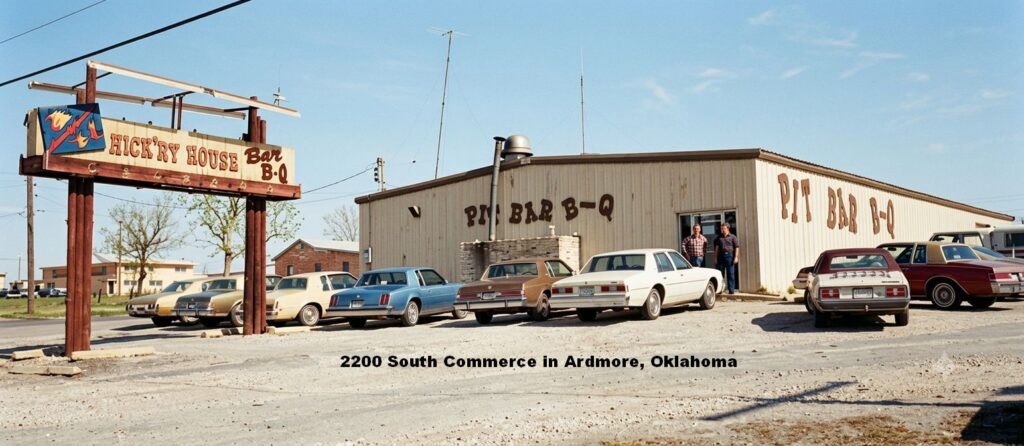
Below is a picture of the old Hickory House BBQ on South Commerce. The old Hick’ry House BBQ (located at 2200 South Commerce in Ardmore) officially closed its doors in June 2004 after years of operation by owner K.P. Walker. While the original brick-and-mortar restaurant closed down then, the family’s barbecue tradition lived on for a while through his daughter, who continued serving their pit BBQ from a mobile stand near South Commerce and Broadway. The building is still standing but no business in it for many years.
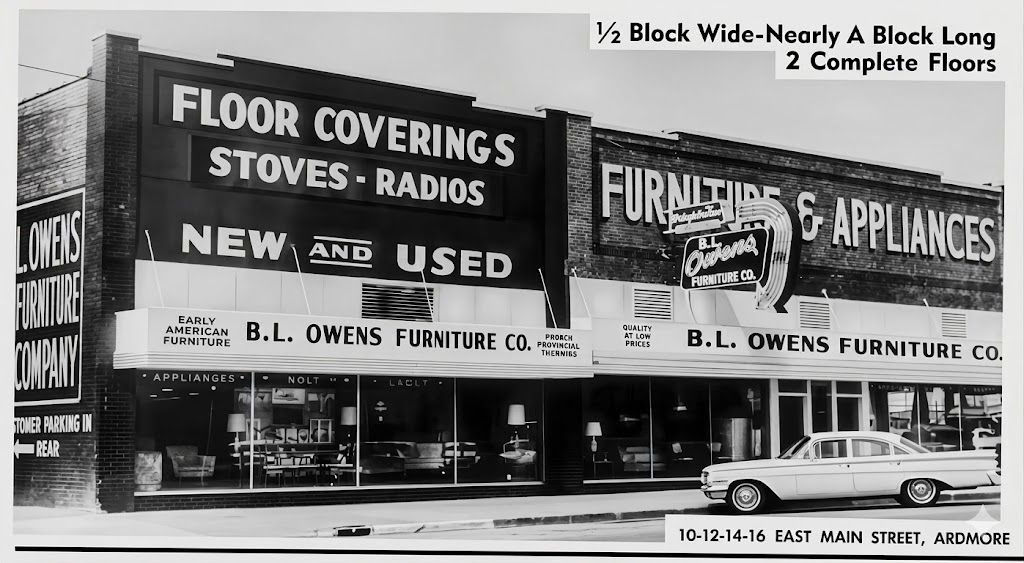
B.L. Owens was one of the main furniture and appliance stores people in this area traded with back in the 60s and 70s. My folks bought their first Curtis-Mathes color TV there when I was a wee lad. Curtis Mathes televisions were high-end, American-made entertainment systems renowned for their durability and elegant wooden cabinetry. Famous for claiming to be “the most expensive television set in America, and darn well worth it,” they remain highly sought-after by vintage collectors and retro gaming enthusiasts today. Founded in 1957 in Garland, Texas, the Curtis Mathes Corporation positioned itself as a luxury brand. Their units often combined a color CRT TV, a turntable, and an 8-track or cassette player into a single piece of living room furniture. Today no televisions are made in the U.S.A. but some are assemble here using parts from overseas.
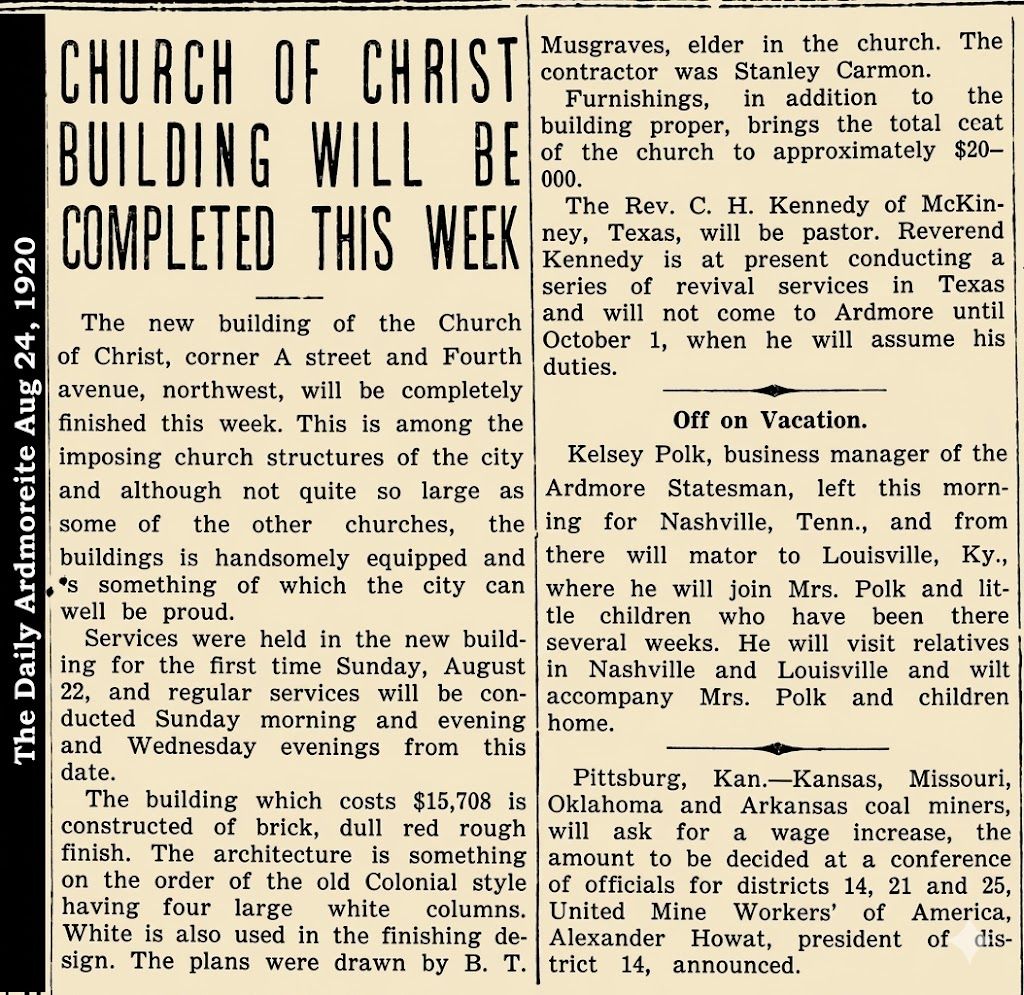
My grandfather, Stanley Carmon, was the building contractor for the Church of Christ that was located at A NW and 4th Street in Ardmore. Following the closing of the church about 1951, the old church was used for the Ardmore Barber and Beauty Supply for many years.
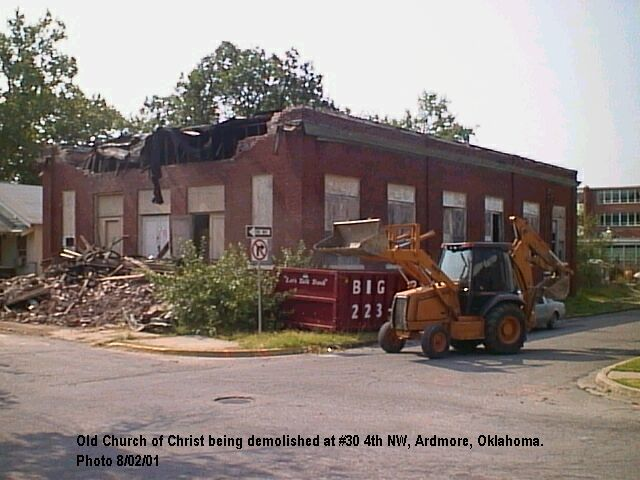
I took this picture of the church being demolished in August 2001. In the years following the old church was used for the Ardmore Barber and Beauty Supply for many years. You can see the old Ardmore Junior High science building and gym in the background. It was demolished in late 2001.
Q. When did Oklahoma stop using Rural Route addresses?
Gemini AI: There wasn’t a single, statewide day when Oklahoma instantly stopped using Rural Route (RR) and Highway Contract (HC) box number addresses. Instead, the phase-out happened county by county, starting in the mid-1990s and continuing through the 2000s and 2010s.
The entire shift was driven by the rollout of Enhanced 911 (E-911) systems.
Why the Change Happened
Traditional rural route addresses (like Rural Route 2, Box 140) were designed purely for the convenience of the U.S. Postal Service to deliver mail, not for location mapping.
The introduction of E-911 required emergency dispatchers to have Automatic Location Identification (ALI). If a homeowner called 911 from a landline, the system needed a physical, locatable street address (e.g., 14305 County Road 1220) so fire trucks, ambulances, and sheriff’s deputies could instantly map and navigate to the property.
The Timeline of the Phase-Out
Because addressing in Oklahoma is handled at the local city and county level, every area moved at its own pace:
• The Mid-to-Late 1990s: Populous counties and areas surrounding major hubs (like Oklahoma City and Tulsa) began aggressively renaming rural paths to grid-based county roads and forcing physical addressing.
• The 2000s: The bulk of Oklahoma’s rural counties underwent their physical E-911 conversions during this decade. County commissioners assigned names or grid numbers to dirt and gravel roads and issued green reflective house number signs to rural residents.
• 2010 and Beyond: The transition took surprisingly long to fully standardize. A Federal Communications Commission (FCC) report from 2010 noted that even by then, only about 75% of Oklahoma’s public safety agencies had fully completed their rural route conversions to physical addresses. The remaining rural patches finalized their systems into the 2010s.
How the Mail Caught Up
When a county converted to E-911, the Postal Service used a database system called LACSLink (Locatable Address Conversion System) to automatically redirect mail. For a grace period of one to two years after a county’s conversion, the post office would deliver mail addressed to the old Rural Route format. Eventually, the old format was officially retired, and any mail sent to an RR address was marked “Undeliverable as Addressed” and returned to the sender.
Today, while the postal routes themselves are still internally referred to by the USPS as “Rural Routes” for mail carrier assignments, the public-facing addresses have been entirely replaced by standardized physical street names and numbers across the state.
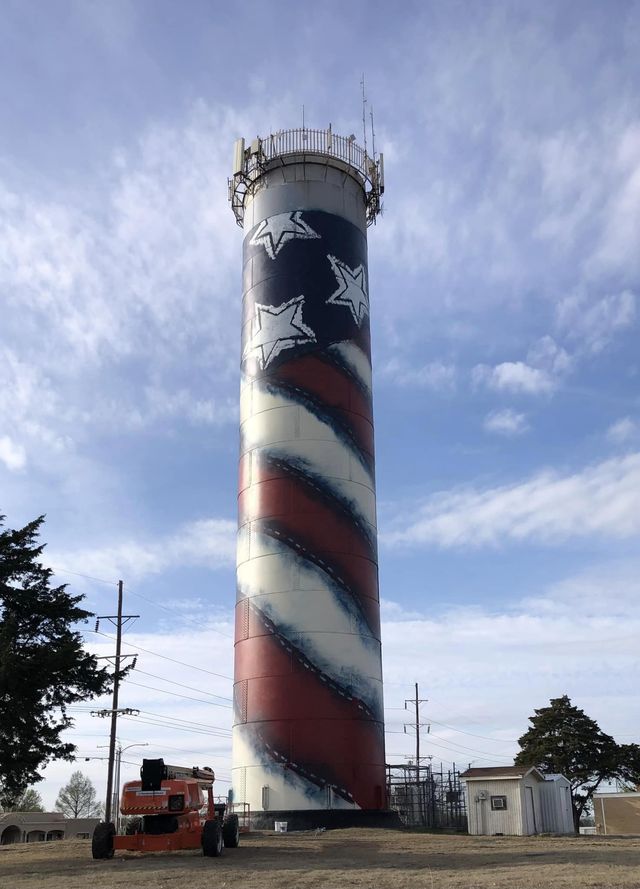
Q. When was the standpipe on North Commerce built? -Ron
A. The historic standpipe on North Commerce Street in Ardmore was built in 1902 or 1903, a few years before Oklahoma achieved statehood. Standing roughly 100 feet tall and 80 feet in circumference, it served as a vital piece of early municipal infrastructure. During World War II, it even became a welcome beacon for pilots flying back to the Ardmore Army Airfield, who knew they were safely home when they spotted the lights at the top of the tower. Today, while it’s no longer used for its original water storage purpose (and instead plays host to modern communication equipment), it remains a major local landmark— recently highlighted by a commemorative mural painted by artist Dr. Bob Palmer.
I took this picture of the standpipe in March 2023
Q. What is the name of the only river in Oklahoma that flows north?
A. The Poteau River is the only river in the state that flows north. It begins in the Ouachita Mountains of Arkansas and flows westward into Oklahoma, where it turns north through Poteau (pop. 7,939) and eventually joins the Arkansas River.
Q. What is the richest town in Oklahoma?
A. The No. 1 richest city in Oklahoma in this ranking is Lake Aluma, a small little square-shaped town northeast of Oklahoma City. This place has only 29 households in total.
From This Weeks Mailbag
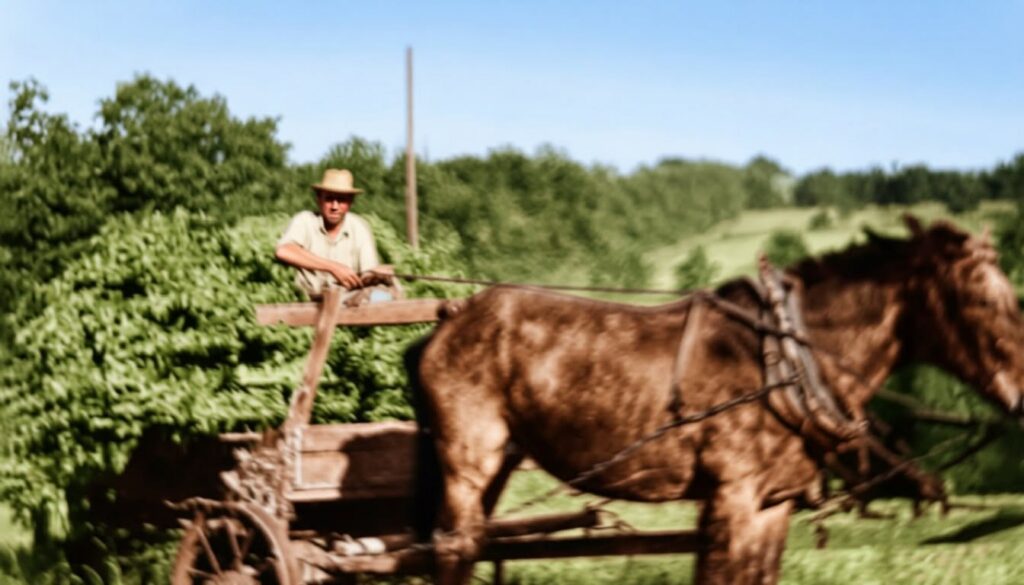
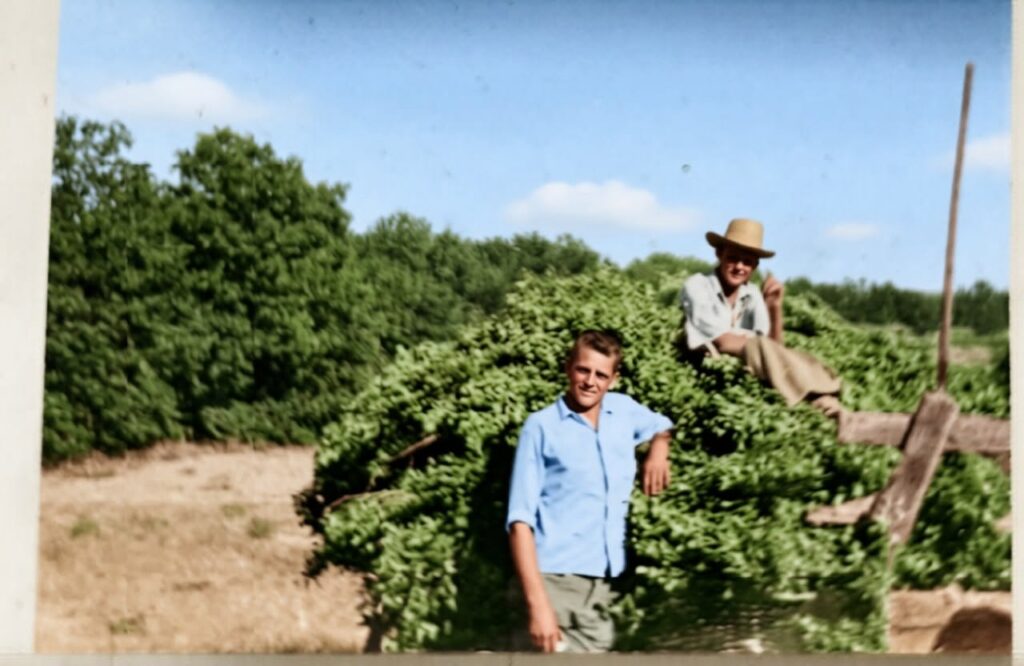
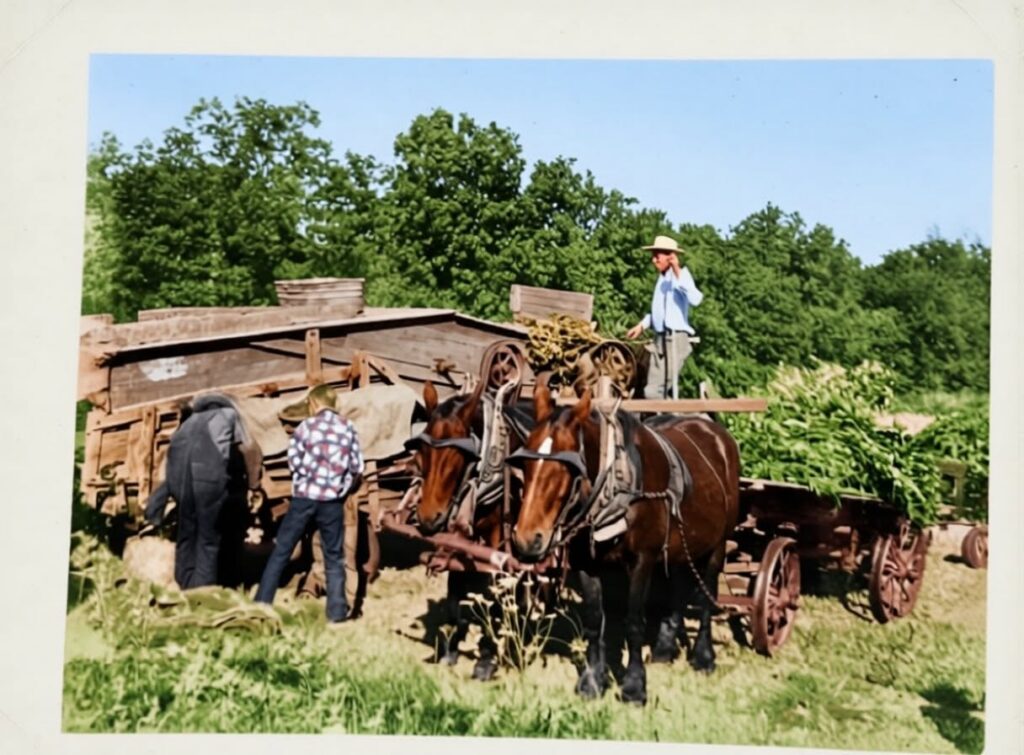
Peanuts were a big part of Southern Oklahoma’s past and my grandfather Albert Bates grew peanuts. These pictures show him on the peanut wagon alone, then with my uncle John Bates and finally the threshing crew and thresher. I had never seen a peanut thresher like this before. It is run by a flat belt hooked to a tractor. -Rick Burris
“The test of our progress is not whether we add more to the abundance of those who have much; it is whether we provide enough for those who have too little.” — Franklin D. Roosevelt
See everyone next week!
Butch and Jill Bridges
Ardmore Oklahoma
580-490-6823
https://oklahomahistory.net