
Herman Cheek is killed at Ardmore
The Daily Ardmoreite – 1956
H. R. Cheek of Holdenville was called to Ardmore Sunday by a message from that City stating that his son, Herman Cheek, had been shot to death by an Ardmore officer. Herman Cheek was proprietor of the barbershop in Ardmore and was killed Saturday night when officers entered a back room of the barbershop where some men were engaged in a friendly game of poker
From press dispatches from Ardmore it appears that the shooting of Cheek was entirely unprovoked.
When two policemen entered the back room of the barbershop a defect in the wiring is supposed to have cut off the lights and eventually one of the officers began shooting and shot Cheek through the abdomen, inflicting a wound from which he died in a short time. A friend of Cheek attempted to aid him but was stood off by the officers until the chief of police arrived on the scene. Harry Sipes, the officer who did the shooting, is under arrest.
Considerable feeling has been aroused among the people of Ardmore by the unwarranted killing of the general opinion is that the officer committed willful murder. Mr Cheek of Holdenville has the deepest sympathy of all his friends and neighbors.


Some mail from this week’s MAILBAG…..
Q. What is a push-in bottle? -Mindy
A. Push-in soda pop bottles

https://www.jjsedelmaier.com/post/manage-your-blog-from-your-live-site
HAM Talk By Butch Bridges KC5JVT – Allstar node # 58735 – Echolink # 101960
The Arbuckle 97 net is held every Sunday evening at 8:00pm. The Net is open to any licensed HAM. Hope to hear more local HAMs check-in


Below is from my newsletter archives dated
August 14, 2008 – Issue 603
Last week we mention how infamous the old Mulkey Hotel at 2nd and North Washington has been over the years. Lots of stories I know could be told about that Ardmore landmark. I mentioned that Sheriff Robert Denney shot and killed Frank Anderson Venable, 25, of Baxter Springs, Kansas. But in reality I was only at the place of the shooting about 3 minutes, just long enough to place the wounded robbery suspect in our 1967 Chevrolet station wagon ambulance, and rush him to the hospital.
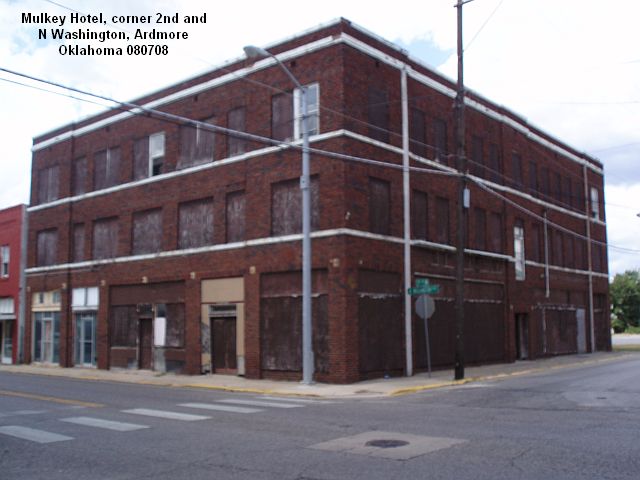
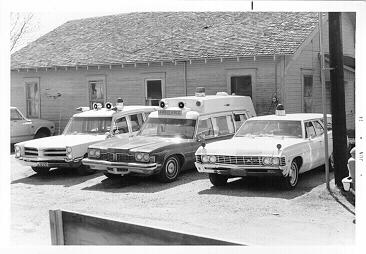
But I remembered back in 2002 when James Clark, the DA at the time of the Mulkey shooting shared his memories of the incident with Correna Wilson and I through an email. James has shared some really great local history over the years, and his recollection is an insight to this shooting few people today know. Below is the 1972 Mulkey Hotel shooting in his own words:
Around 7:00 one Tuesday evening, three young white males and a young female, all armed, entered a convenience store in Marietta on Highway 32, shoved the elderly female attendant around, emptied the cash register, then locked her in a small inside restroom. The youths taunted the clerk and loudly told her they were going to shoot her through the rest room door. Sure enough, one of them fired multiple shots through the door, almost scaring the poor lady to death. We learned later that a track starter pistol had been used to fire the shells through the door, but obviously the lady locked in the restroom of the convenience store didn’t know that at the time. The four teens left the store with around $2,500 in cash and checks.
After several minutes of terror, the lady broke out of the restroom and called the Love County Sheriff’s Department. It didn’t take long for that department to spring into action. Within minutes my longtime friend and Love County Sheriff Wesley Liddell had a small army of peace officers and the Oklahoma Highway Patrol out in force looking for the robbers. I was at the Carter County Sheriff’s Department when the first call came in that the robbers were probably heading north toward Ardmore, and that everyone should be on alert for them. Police radios in vehicles and offices went crazy with calls about the incident and possible sightings of the four young thugs. Sheriff Robert Denney summoned Deputy Bud Hunt as his partner on the case, and dispatched other deputies around the county to look for the fugitives. I recall that Denney and Hunt left the Sheriff’s Department on Hinkle Street in Bud’s Rambler American police cruiser, which was a two door sedan. The two doors of that vehicle would play a pivotal role in the fatal shooting that would take place sometime after midnight in front of the Mulkey Hotel.
Hours went by after the robbery without contact with the Love County robbers. It was as if they had dropped off the face of the earth. We pretty well knew they hadn’t gone south, since there were some Texas D.P.S. troopers waiting north of Gainesville. The O.H.P. had set up several roadblocks on I-35 north and south of Ardmore with no luck. Ardmore P. D. units were out in force watching U.S. Highway 77 and the city’s streets while Carter County deputies patrolled county roads. As I said, hours went by, with nothing. I began to fear that the foursome had gotten away with their crime.
Then shortly after midnight of that fateful evening we got a break. An Ardmore wrecker driver had been summoned by a motorist to extract a motor vehicle from a ditch south of Plainview Schools on Plainview Road. When the wrecker arrived, the sedan had been abandoned. It bore Florida license plates and appeared to be heading north on Plainview Road toward Ardmore when it apparently ran off the roadway. Law enforcement officials quickly converged on the scene, and because of various items recovered from the interior of the vehicle, we quickly learned that it was the robbers’ car.
Police units quickly fanned out all over southwest and southern Ardmore but could not locate any group walking on Myall Road east or west, or Plainview Road, north or south or anywhere else. Once again, the foursome involved had apparently gotten out of reach.
I remember talking to Robert Denney that evening about the case and what we knew about the actions of the people we were seeking. The sheriff’s logical deductions and thoughts on the likely whereabouts of the robbers impressed me. Like other officers involved in the investigation, the veteran sheriff was convinced that the vehicle belonged to the robbers, and that they had likely left the Plainview area on foot. He was not convinced that they were walking aimlessly around or hiding in some pasture in that area, however.
Denney theorized that with the young girl with them, the trio of fugitive males would probably be able to easily hitch a ride into Ardmore. Their best bet, he considered, was to get into town, get a room in a quiet hotel, and stay out of sight until things cooled down. I recall that he told Bud Hunt that the two of them were going to check with the various hotels downtown, starting with the Ford Hotel, then the Knox, then the Mulkey. The latter was located on North Washington street, just south of the Ardmore High School. Robert and Bud got into Deputy Hunt’s vehicle, (with those two doors I mentioned earlier) and left the sheriff’s department on Hinkle Street.
After checking the first two hotels, the two peace officers reached the Mulkey. Bud Hunt parked his vehicle near the curb on the east side of Washington Street, headed north. The only person in the hotel’s lobby that morning was the desk clerk. Denney checked the inn’s register and found four guests, three males and a female, had logged in shortly after midnight. He and Hunt immediately knew they had found who they were looking for. They drew their side arms and went up the hotel’s stairs to look for the foursome that they knew were likely dangerous and would probably resist arrest.
They immediately confronted one of the young males in the hall, just off the hotel’s second floor landing. His shocked reaction was apparently enough probable cause for the veteran officers. Hunt immediately arrested and handcuffed the young man behind his back. At the officers’ behest, the subject pointed to the room where his confederates were. Now with only one pair of handcuffs between them and guns drawn, the officers kicked the hotel room’s door open.
On the bed was the young girl and one of the males. They were counting the cash receipts from the armed robbery committed earlier that evening in Marietta. Both immediately raised their hands and surrendered. Denney cuffed the male. Now they had three suspects in custody, one to go with no handcuffs . Regretfully, the two county peace officers had not summoned backup assistance from the Ardmore P.D. That turned out to be a big, almost fatal, mistake.
Denney later gave me a statement of what happened. “Bud and I knew the last one was probably in the bathroom,” he said. “What we didn’t know was that we had cuffed the two least dangerous males in the group, and didn’t have any handcuffs for the last one who turned out to be the most dangerous of them all. I eased the bathroom door open and saw him sitting on the commode. I pointed my pistol at him and told him he was under arrest for armed robbery. He yelled at me to ‘get out and shut the damn door.’ Needless to say, I didn’t oblige.”
Denney forcefully brought the last one from the bathroom into the hotel room, and the four arrestees were taken down the hall, down the stairs, and out on the curb on Washington Street. Robert later told me that he sensed all the way down the stairs and outside the hotel that the one robber who was not manacled was going to pull something. As a result, the sheriff never took his eyes off him. As Deputy Hunt prepared to put the man into the vehicle, Denney stood on the east curb in front of the passenger’s side door of Hunt’s car, holding the young female next to his left side. I still recall exactly what Robert told me happened next.
“Bud carried a .357 Magnum revolver, and he had some trouble getting the passenger’s side door to break forward so he could put the guy in the back seat,” the Sheriff said. “As Bud bent over to push the seat forward, the guy jerked the Magnum out of Bud’s holster, quickly cocked it and pointed it at Bud’s chest. I instantly knew that Bud was going to die right in front of me. However, just before he pulled the trigger on Bud’s gun, evidently the young man remembered that I was armed. So he jerked the gun around in my direction. Acting on instinct, I grabbed the girl’s sweater at her right shoulder, jerked her in front of me as a shield, and raised my .38 caliber pistol to a point just above her right ear. I fired one time and the young man dropped to the street.” The sheriff told me that he knew the instant he fired his weapon that the young man holding Bud Hunt’s cocked revolver wasn’t going to rob any more stores or intimidate any more elderly people. Sure enough, the single shot from Denney’s Smith and Wesson .38 passed through the young robber’s chest and heart, killing him instantly.
As the county prosecutor, I was overwhelmed when I learned what had happened. The quick action of the veteran sheriff had clearly saved Deputy Hunt’s life, and no doubt his own. (Later on in the investigation I learned that Denney’s theories about what the young robbers would likely do turned out to be right on target. The quartet had driven west of I-35 in Marietta after the robbery and begun to weave their way north on back roads. After several hours they had driven up Plainview Road and not being familiar with the area, had rounded a corner a couple of miles south of the Plainview School and slid off into a ditch near the side of the road. They took the money and other things they had stolen from the Marietta convenience store and started walking north. The young female got out in front and began hitchhiking and sure enough, an older man in a pickup stopped and invited her into the cab. Her three male friends then came out of the dark and got into the rear of the truck. The driver, probably never aware of the danger he faced, took them to downtown Ardmore and let them out. The four young people then strolled north on Washington Street until they found the Mulkey Hotel.)
I guess the strangest thing about the above story is that the small town drama occurred on Washington Street in Ardmore without a backup police unit of any kind. The little sheriff and his large deputy apparently never thought to request any type of assistance as they carried out the dangerous task at hand that night. Within minutes of the shooting, however, everything seemed to happen at once. A.P.D. and O.H.P. units came from everywhere, and it seemed detectives were all over the place. We had the three survivors of the outlaw band in custody, and they were taken to the Sheriff’s Department on Hinkle Street for questioning. The telephones were ringing off the wall, with media calling from not only Oklahoma and Texas, but Florida, where the youths had started their five state crime spree. Peace officers from other states were calling, too. I remember questioning one of the survivors in a room off the Sheriff’s quarters when an Ardmore police officer and friend of mine, Louie Cummings, opened the door and asked “D.A., what about the press?” I clearly misunderstood his question, thinking that the local press had apparently come to the station house and wanted information and details about the story. I muttered something like “later” and went on with my work, which we didn’t finish until four a.m. or so. I learned to my dismay the next day that Officer Cummings was actually asking for my decision whether the local press should be called. Well, they weren’t called as a result of my “later” comment to Louie, and as a result got scooped on the story by some big city media people. Needless to say, relations with the Daily Ardmoreite were a little cool around the District Attorney’s office in Ardmore for several weeks after.
Two things happened to me personally before this story played out. First I received a telephone call several days after the shooting from the parents of the young man Sheriff Denney had killed that fateful night. They were polite and considerate. Both were on the phone line when we spoke. The call was a delicate thing to handle. I recall that they emphasized to me that they wanted the absolute truth about what had happened to their son. I pledged that to them, and related the whole story, from start to end as I knew it. I left nothing out. By then I had some good information about some other robberies and thefts the foursome had been involved in on their way to Oklahoma while passing through other states, and gave them that information. When it came to details of their son’s death, I told them precisely what I was aware of, and read portions of official reports. When I was through they thanked me and remarked that they were satisfied that Oklahoma law enforcement officials had acted properly, and that although their hearts were broken, that they felt that their son had gotten exactly what he deserved. It was a disturbing, sad call from two people who apparently had long ago lost control of their wayward son.
A couple of days later, a local attorney came to my office. He told me that he had spoken with Sheriff Denney about the Mulkey Hotel shooting, and suggested a “friendly prosecution” to cloak the Sheriff with double jeopardy. I couldn’t believe what I was hearing. The lawyer went on to say that a grand jury might convene in the future and indict Sheriff Denney for murder and a sham “trial” would prevent that. His idea was to convene before a district judge, waive trial by jury, call one or two witnesses to generally describe what happened, then rest the state’s case. The judge trying the matter would then render a quick verdict of Not Guilty, and because of the principles in the law of former jeopardy, the acquittal would bar Sheriff Denney from being prosecuted for what happened that night in front of the Mulkey Hotel at anytime in the future. It was in effect a sweetheart prosecution request. It was also an outright sham.
I was outraged at the suggestion of such a proceeding, and refused to participate in the matter. I thought the whole idea was a sham and a whitewash, and that there was a good chance that the local Carter County judges wouldn’t go along with it. I talked to the sheriff about it several times, and he admitted being confused. Being a layman, he wanted to be sure that he had some measure of protection from a future prosecution for what had happened that fateful night. I assured him best I could that there would never be any prosecution over what happened, and that he had acted properly in the matter and clearly saved Bud Hunt’s life. I assured him that any prosecutor or grand jury at anytime in the future would recognize those clear facts leading to justifiable homicide. The sheriff evidently believed me, and no charges were ever filed. The very idea of prosecuting Sheriff Denney over what happened still strikes me as being absurd.
I hope that your readers enjoy this little story about two courageous Carter County peace officers who didn’t think twice that fateful night about risking their personal lives for the public good.” -James A. Clark, Ardmore
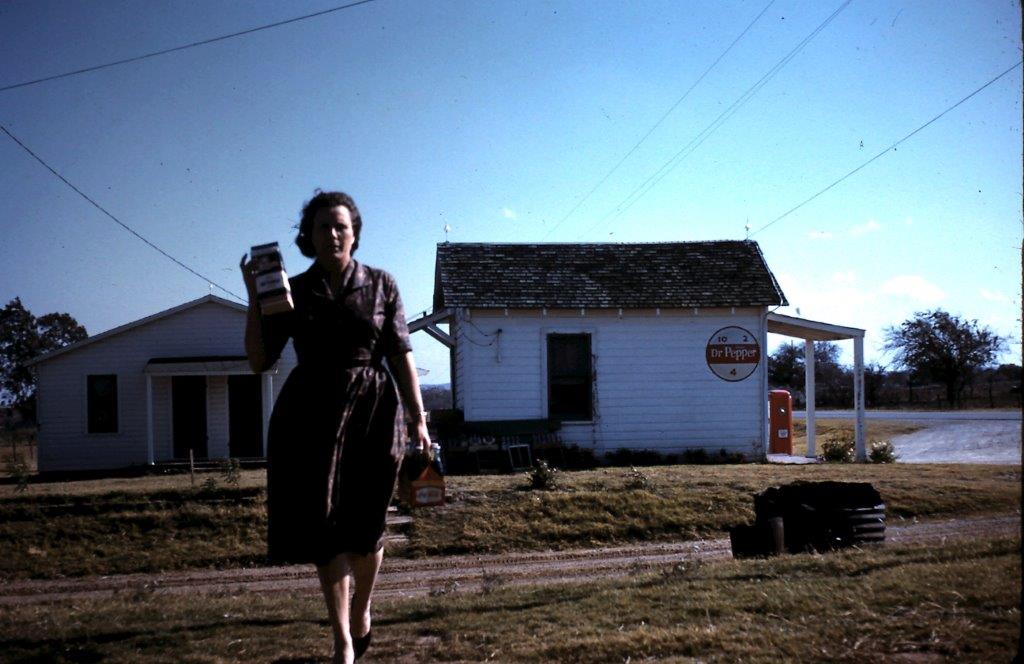
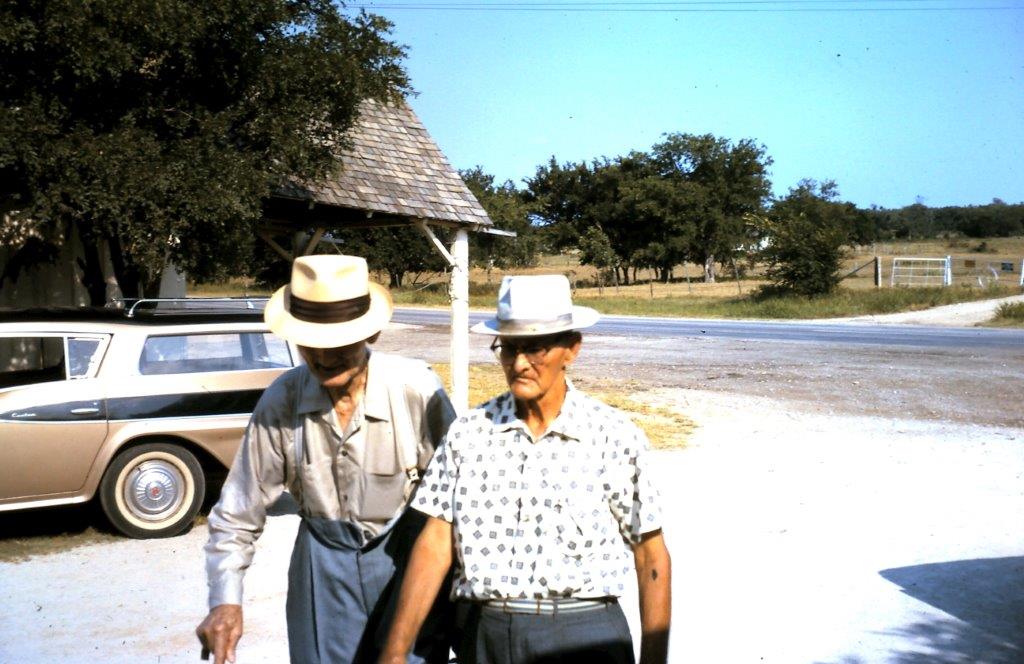
THIS IS JERRY SADLER THE GRANDSON OF MAT SADLER, IN YOUR ARCHIVES VOLUME 17-2013 DATED 08/15/13 #864, I SEE THE PHOTO OF THE SADLER GROCERY STORE AT HENNEPIN. THIS TAKES ME BACK 60 PLUS YEARS, THE FAMILY HOME WAS ACROSS THE STREET, IN THE PHOTO OF ED SADLER. HE WAS SHOWN HERE WITH HIS OLDER BROTHER, MADISON, OR AS WE CALLED HIM MAT. MY GRANDFATHER WAS BORN DECEMBER OF 1877. MY SON WAS BORN NOVEMBER OF 1977. MY MARC, IS HIS GREAT GREAT GRANDSON. -JERRY SADLER
https://oklahomahistory.net/ttphotos13a/HennepinOKgrocery.jpg
https://oklahomahistory.net/ttphotos13a/EdSadlerHennepinOK.jpg
Kindness is the language which the deaf can hear and the blind can see. -Mark Twain
See everyone next week!
Butch and Jill Bridges
Ardmore, Oklahoma
580-490-6823
https://oklahomahistory.net