
We’ve lived here 2 miles south of Lone Grove for 19 years and just learned this week there is a new wildlife rescue center just 1 mile south of us on Meridian Road. Its called the Southern OK Second Chance Wildlife Rehabilitation Foundation. They perform rescues, rehabilitates, and safely releases native Oklahoma wildlife—such as orphaned baby squirrels, raccoons, opossums, deer and hawks—back into their natural habitats.
Current needs are: Pet carriers/taxis of all sizes, towels, nursing blankets, 5ml syringes, heating pads without auto shut-off, and farm store gift cards for formula. Southern OK Second Chance Wildlife Rehabilitation Foundation is a registered 501(c)(3) non-profit wildlife rescue.
Address: 151 Dixie Ln, Ardmore, OK 73401
Their phone number is (580) 504-9055. They have a Facebook page:
https://www.facebook.com/p/Southern-OK-Second-Chance-Wildlife-Rehab-61586286625431/
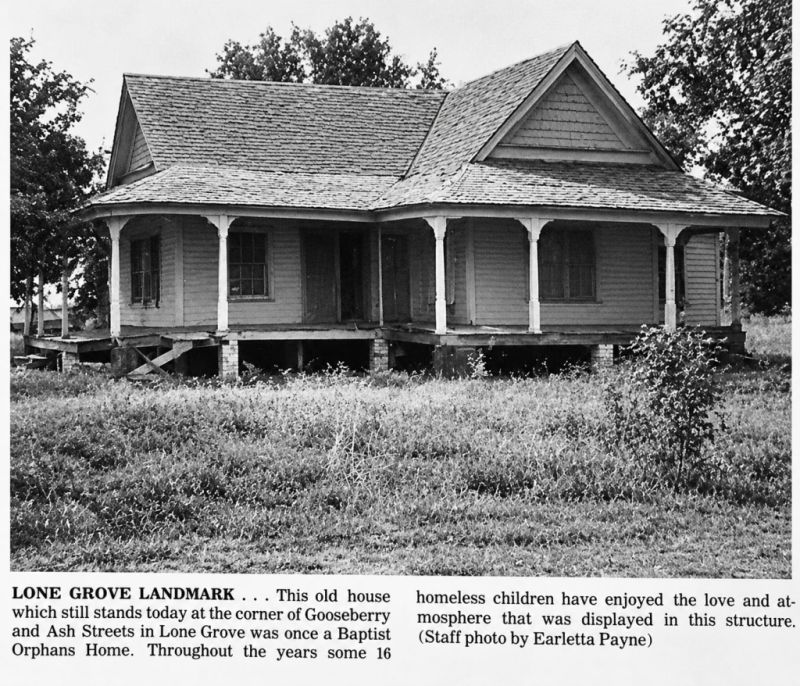
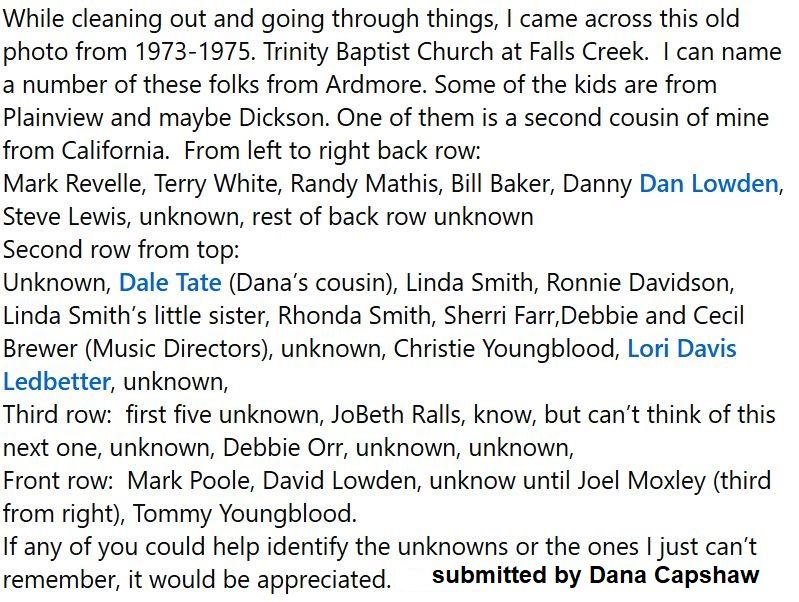
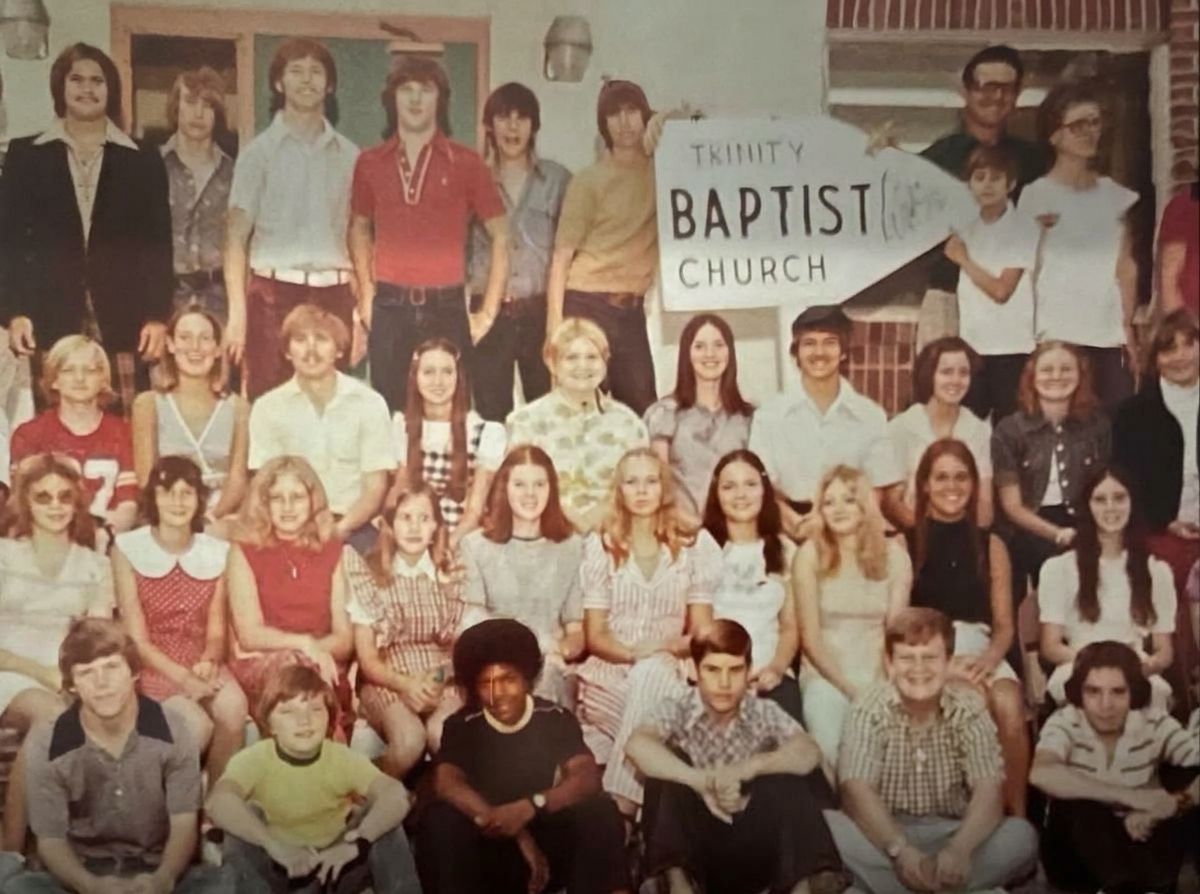
The old Baptist Orphans Home in Lone Grove is just a memory. Long gone from the site.
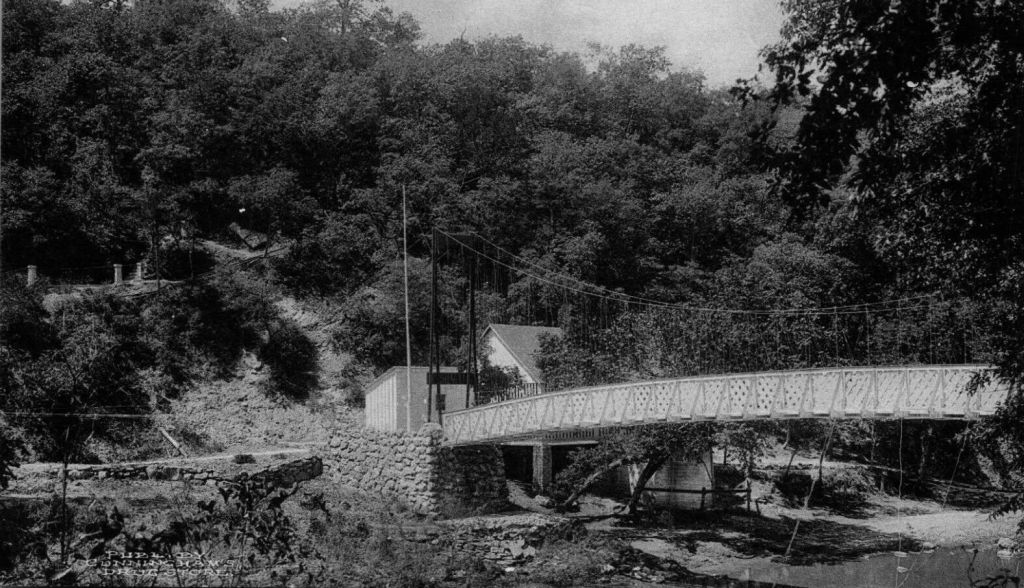
The historic Bromide Suspension Bridge (often referred to as the “swinging bridge”) was a wire cable footbridge located in Sulphur, Oklahoma, within what is today the Chickasaw National Recreation Area (formerly Platt National Park).
History & Overview
Purpose & Location: Built in 1907–1908, the suspension bridge was constructed across Rock Creek to provide park visitors easy pedestrian access to Bromide Spring, Medicine Spring, and Bromide Hill.
Design: It was a light, cable-suspended pedestrian bridge, commonly known locally as a “swinging bridge”.
Historical Context: During the early 1900s, thousands of tourists traveled to Sulphur to drink and bathe in the mineral waters of Bromide Spring, which were believed to have health benefits. The bridge was a primary feature on vintage postcards and early park photos from the territorial and early statehood eras.
Destruction: The original swinging bridge was washed away during a major flood on Rock Creek in 1916. It was later replaced by other iron/stone bridge structures and trail improvements, particularly during the Civilian Conservation Corps (CCC) era in the 1930s.
From This Weeks Mailbag
Q. Hi Butch. I have a question. Where might I find info about M. E. Atkins who died in the explosion in 1915?
A. The following is from Sally Gray‘s book, Territory Town: The Ardmore Story:


For the second time, Ardmore proved that it was a town too tough to die after surviving another major disaster in 1915. A 250 barrel tanker railroad car, designated I.N.T.X, 8051, parked in the 93 degree Oklahoma heat and carrying casinghead gasoline, exploded on the tracks, destroying the Union Depot, killing forty-nine people and injuring dozens more. The eastern sector of the city was once again demolished. Many downtown buildings which were not destroyed, suffered major damage. Three blocks away from the blast, Charles R. Smith standing on Main Street and Millard. E. Atkins on Washington were killed by dislodged stones hurtling downward from the shaken buildings. Windows and glass fronts were shattered as far as half a mile away.
The Tech Corner
In my last issue I talked about ordering the Meshtastic peer-to-peer communication network module. Well, I got it in but having trouble configuring it (flashing the newest Firmware to it). So, its not going to be an instant setup and running. But I’ll get it.
Kinda like my experience 7 years ago setting up an Alstar node compared to an Echolink node. Alstar was so complicated compared to Echolink it took me off and on several months to get Alstar up and running. I have this joke, kinda, I tell: You need 2 college degrees to setup Alstar. But the 14 year old kid down the street can get Echolink up and running on a computer in an hour. lol
Ham Radio
This coming Saturday is the big day. Ardmore’s Hamarama HAMFEST in Ardmore Oklahoma. Tickets are available at the door.
https://hamarama.org/


See everyone next week!
Butch and Jill Bridges
Ardmore Oklahoma
580-490-6823
https://oklahomahistory.net